
ARTICLE
SUSTAINABLE CONSTRUCTION – PART 4
BIOSOURCED MATERIALS:
Overview and performance
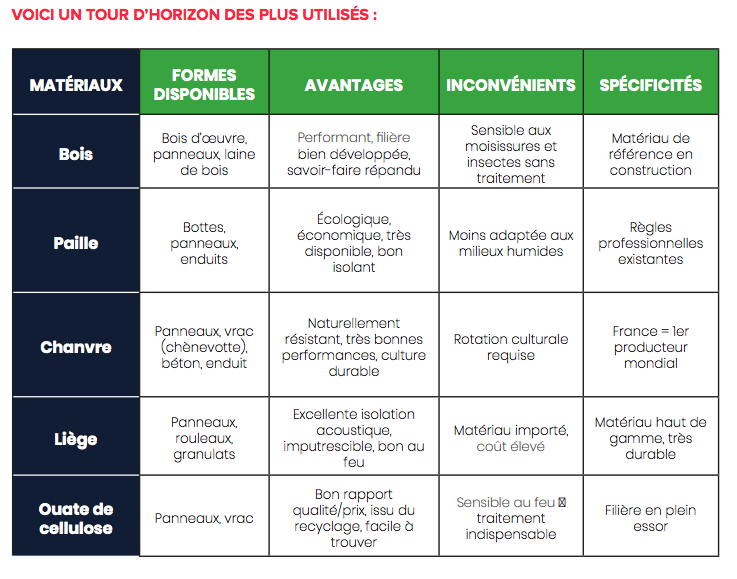
Overview of the most common biosourced materials and insulators:
Biosourced materials, derived from renewable plant or animal resources, are increasingly popular in sustainable construction. In addition to their low environmental impact, many offer excellent thermal and acoustic performance.
RECYCLED CONCRETE IN FRENCH-SPEAKING SWITZERLAND:
towards a more circular construction
Concrete is the most widely used construction material in the world but also one of the largest carbon emitters. In French-speaking Switzerland, the recycled concrete sector is growing rapidly, significantly reducing environmental impact while reusing waste from demolition sites.
What is recycled concrete?
Recycled concrete is made using aggregates from demolished or deconstructed structures (buildings, roads, tunnels, etc.). These aggregates partially or completely replace natural materials extracted from quarries.
Main characteristics:
- Mechanical strength comparable to traditional concrete.
- Good durability and can be recycled again at end of life.
- Significant reduction in inert waste and quarry exploitation.
A local and circular resource
In French-speaking Switzerland, the proximity of demolition sites and concrete plants facilitates local supply of recycled aggregates, reducing transport distances and CO₂ emissions. This circular approach supports resource efficiency while creating new jobs in the recycling sector.
Controlled technical performance
Today, recycled concrete is used in many major projects, meeting Swiss SIA standards and client requirements. Its structural performance is comparable to that of conventional concrete while offering major ecological benefits.
“In the face of climate urgency and the depletion of raw materials, recycled concrete is emerging as a key solution for building more sustainably.”

Leave a comment